

Why Marketing Automation Software Matters More in 2026
In 2026, businesses are operating in an environment where customer expectations are higher, competition is faster, and digital channels are more fragmented than ever before. This is why Marketing automation software has become a core tool for modern marketing teams instead of just a supporting technology.
Companies are no longer relying on manual campaigns or basic email scheduling. Instead, they are adopting intelligent systems that can analyze customer behavior, predict actions, and automate entire customer journeys. The right Marketing automation software can help businesses increase conversions, reduce workload, and create highly personalized experiences at scale.
However, not all platforms are built the same. Choosing the right solution requires understanding the key features that truly matter in 2026.
AI-Powered Personalization and Predictive Marketing
One of the most important features to look for in Marketing automation software in 2026 is advanced AI-driven personalization. Modern customers expect brands to understand their needs instantly, and generic messaging is no longer effective.
AI-powered systems analyze user behavior, purchase history, browsing patterns, and engagement signals to deliver personalized content in real time. This includes:
- Dynamic email content that changes based on user behavior
- Personalized product recommendations
- Predictive lead scoring
- Automated customer journey mapping
Predictive marketing is also becoming essential. Instead of reacting to customer actions, businesses can now anticipate them. For example, the software can predict when a customer is likely to churn and automatically trigger retention campaigns.
Omnichannel Campaign Management
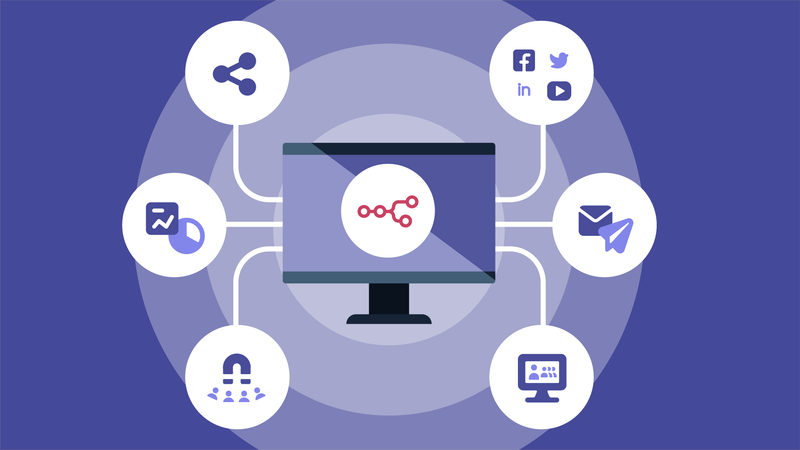
Another critical feature of modern Marketing automation software is omnichannel capability. Customers today interact with brands across multiple platforms such as email, social media, SMS, websites, and even messaging apps.
A strong automation platform must allow marketers to manage all these channels in one place. This ensures consistent messaging and a seamless customer experience.
Key capabilities include:
- Unified campaign dashboard for all channels
- Cross-channel customer journey tracking
- Automated messaging based on channel preference
- Real-time synchronization between platforms
In 2026, customers expect brands to remember their interactions regardless of where they engage. Omnichannel automation ensures that no message feels disconnected or repetitive.
Advanced Customer Segmentation and Behavior Tracking
Modern Marketing automation software must go far beyond basic segmentation like age or location. In 2026, behavior-based segmentation is the standard.
This means grouping customers based on actions such as:
- Pages visited on a website
- Products viewed or added to cart
- Email engagement levels
- Purchase frequency and spending habits
With advanced segmentation, marketers can create highly targeted campaigns that feel personal and relevant. Behavior tracking also helps businesses understand the customer journey in detail, identifying drop-off points and opportunities for improvement.
The more precise the segmentation, the higher the conversion rate.
Seamless CRM Integration and Data Synchronization
In 2026, Marketing automation software must work hand-in-hand with CRM systems. Without proper integration, businesses risk data silos that lead to poor decision-making and inconsistent communication.
A well-integrated system ensures:
- Real-time data syncing between marketing and sales teams
- Unified customer profiles with complete interaction history
- Better lead management and scoring
- Faster sales follow-ups based on automated triggers
When CRM and marketing automation work together, businesses can create a smooth pipeline from lead generation to conversion without manual intervention.
No-Code and Low-Code Automation Builders
Ease of use is becoming a major requirement in 2026. Businesses no longer want to rely heavily on developers to set up workflows. This is why modern Marketing automation software must include no-code or low-code automation builders.
These tools allow users to create complex workflows using drag-and-drop interfaces. For example:
- Setting up email sequences without coding
- Creating conditional triggers based on user behavior
- Designing automated sales funnels
- Building multi-step customer journeys
This democratizes marketing automation, allowing even small teams to execute advanced strategies without technical barriers.
Real-Time Analytics and Performance Tracking
Data-driven decision-making is at the heart of effective marketing. In 2026, Marketing automation software must provide real-time analytics that go beyond basic reporting.
Important metrics include:
- Customer acquisition cost (CAC)
- Lifetime value (LTV)
- Conversion rates across channels
- Email open and click-through rates
- Funnel drop-off analysis
Advanced platforms also offer AI-generated insights that explain why certain campaigns are performing better than others. This helps marketers continuously optimize their strategies instead of waiting for end-of-month reports.
Strong Automation for Lead Nurturing
Lead nurturing remains one of the most powerful use cases of Marketing automation software. In 2026, the focus is on highly personalized and behavior-triggered nurturing sequences.
Instead of sending generic email sequences, businesses now use smart automation that responds to user actions in real time.
Examples include:
- Sending follow-up emails after product page visits
- Offering discounts when a cart is abandoned
- Triggering educational content based on interest level
- Moving leads automatically through funnel stages
This ensures that no potential customer is ignored and every lead is guided toward conversion efficiently.
Enhanced AI Chatbots and Conversational Marketing
AI chatbots are now a standard feature in advanced Marketing automation software. In 2026, they are far more intelligent than simple scripted bots.
Modern chatbots can:
- Answer complex customer queries
- Recommend products based on preferences
- Capture and qualify leads automatically
- Integrate with CRM systems for instant updates
Conversational marketing is becoming a major trend, where customers can interact with brands in real time through chat interfaces. This reduces friction and increases engagement significantly.
Scalability and Cloud-Based Architecture
As businesses grow, their marketing needs become more complex. That is why scalability is a key factor when choosing Marketing automation software.
Cloud-based platforms are now the standard because they offer:
- Easy scaling without infrastructure upgrades
- Faster updates and feature rollouts
- Secure data storage and backup
- Global accessibility for distributed teams
In 2026, businesses expect their tools to grow with them, not limit them.
Data Privacy, Compliance, and Security Features
With increasing global regulations around data privacy, Marketing automation software must prioritize compliance and security.
Key features include:
- GDPR and global compliance tools
- Secure customer data encryption
- Permission-based marketing controls
- Transparent data usage policies
Customers are more aware of how their data is used, and businesses must ensure ethical and legal handling of all information. Strong compliance features also help build trust and brand credibility.
Conclusion
In 2026, choosing the right Marketing automation software is no longer just about sending emails or scheduling posts. It is about building intelligent, connected, and highly personalized customer experiences across multiple channels.
The most effective platforms combine AI-powered personalization, omnichannel marketing, advanced segmentation, CRM integration, and real-time analytics into one unified system. Businesses that invest in these advanced features will not only improve efficiency but also gain a strong competitive advantage in an increasingly digital marketplace.
As marketing continues to evolve, the right automation software will act as the backbone of every successful growth strategy.