

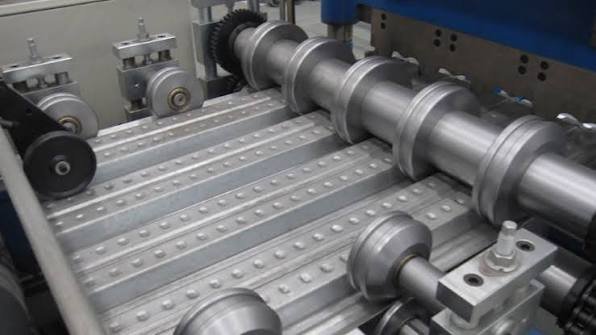
The construction industry is continuously evolving as businesses seek faster, more efficient, and cost-effective building solutions. Traditional construction methods often involve time-consuming processes, significant material waste, and considerable labor requirements. Modern technologies are helping overcome these challenges by improving production speed, accuracy, and structural reliability. Among these innovations, light gauge steel roll forming machines have become essential equipment for manufacturers and construction companies looking to improve building efficiency.
These machines transform flat steel coils into precisely shaped profiles used in walls, roofs, floors, partitions, and other structural components. Their ability to produce consistent steel sections with minimal material waste makes them valuable for residential, commercial, and industrial construction projects. By automating important manufacturing processes, light gauge steel roll forming machines support faster project completion while maintaining high-quality standards.
Understanding Light Gauge Steel Roll Forming Technology
Light gauge steel roll forming is a continuous manufacturing process that shapes flat metal strips into specific profiles. The process begins with feeding a steel coil into the machine, where multiple roller stations gradually bend the material into the required shape.
Unlike traditional fabrication techniques, roll forming does not depend on extensive manual shaping. Instead, automated rollers maintain consistent dimensions throughout production. This allows manufacturers to produce large quantities of steel components with reliable accuracy.
Light gauge steel profiles are commonly used for wall studs, ceiling channels, roof trusses, floor joists, and framing systems. Since these components are lightweight yet structurally useful, they can simplify transportation, handling, and installation.
How Roll Forming Machines Accelerate Construction Projects
Faster Manufacturing and Production
One of the most important advantages of light gauge steel roll forming machines is their ability to manufacture components quickly. Automated production reduces the time required to shape individual steel sections and allows manufacturers to complete large orders more efficiently.
Once machine settings are established, the equipment can continuously produce profiles according to specified dimensions. This reduces production interruptions and helps construction suppliers maintain reliable delivery schedules.
Faster manufacturing is particularly beneficial for large-scale developments where hundreds or thousands of steel components may be required. Consistent production also makes it easier for contractors to coordinate different construction stages.
Reduced On-Site Construction Time
Prefabricated steel components can be manufactured before they reach the construction site. This approach allows workers to install ready-made profiles instead of spending additional time cutting, measuring, and shaping materials on location.
Accurate prefabrication also reduces the likelihood of dimensional errors and unnecessary adjustments. Construction teams can assemble framing systems more efficiently, helping projects move from foundation work to structural installation with fewer delays.
Improved Project Scheduling
Automated roll forming supports predictable manufacturing schedules. Contractors can order specific profiles according to project requirements and arrange deliveries based on construction milestones.
This coordination helps reduce material shortages, unnecessary storage, and workflow interruptions. Manufacturers can also adjust production quantities to meet changing project demands.
The Role of a Floor Deck Roll Forming Machine in Modern Construction
A floor deck roll forming machine plays an important role in producing steel decking profiles used in modern building systems. These profiles are commonly installed as part of composite floor structures, where steel decking supports concrete during construction and can contribute to the finished floor assembly.
The machine processes steel coils through a series of forming stations to create accurately shaped decking sheets. Depending on the design, these profiles may include ribs, grooves, and other features that improve their structural performance and compatibility with supporting systems.
Consistent Floor Deck Production
Accurate dimensions are essential when manufacturing floor decking because the profiles must fit properly across supporting beams and structural frameworks. Automated forming systems help maintain consistent profile geometry throughout production.
This consistency simplifies installation and reduces the need for extensive modifications at construction sites.
Supporting Stronger Floor Systems
Steel decking profiles are designed to provide reliable support during construction. Their ribbed geometry helps distribute loads according to the engineering design, while the finished floor assembly can combine steel decking and concrete to achieve the required structural performance.
A properly configured floor deck roll forming machine enables manufacturers to produce profiles that meet project-specific specifications.
Greater Material Efficiency
Modern floor deck production equipment can help optimize steel usage through accurate feeding, forming, and cutting operations. Reduced manufacturing errors mean fewer rejected sheets and less unnecessary material waste.
For manufacturers handling large construction orders, these improvements can contribute to better production economics.
Improving Construction Quality Through Automation
Greater Dimensional Accuracy
Manual fabrication can produce variations in component dimensions, particularly when large quantities are required. Automated roll forming machines help minimize these differences by maintaining controlled forming conditions.
Accurate steel profiles fit together more consistently, supporting smoother assembly and reducing installation challenges.
Reliable Product Consistency
Modern machines can incorporate computerized controls, automatic length measurement, and synchronized cutting systems. These features help manufacturers maintain repeatable production standards.
Consistent output is especially important for prefabricated construction, where different components must work together according to detailed engineering plans.
Better Quality Control
Advanced roll forming equipment allows operators to monitor production settings and identify potential problems. Regular inspection of profile dimensions, material thickness, surface condition, and cutting accuracy helps maintain product quality.
Combining automation with proper maintenance and quality management creates a more dependable manufacturing process.
Reducing Construction Costs and Material Waste
Construction businesses must balance product quality, production expenses, and project deadlines. Light gauge steel roll forming machines can support this balance by improving manufacturing efficiency.
Automated operations reduce dependence on repetitive manual tasks, allowing workers to focus on equipment monitoring, quality inspections, and production planning.
Accurate cutting and forming also help reduce unnecessary steel consumption. Since steel is a significant material expense, minimizing waste can improve overall profitability.
Furthermore, lightweight steel components are generally easier to transport and handle than many heavier construction materials. This can help reduce certain transportation and installation challenges, depending on project requirements.
Supporting Sustainable and Smarter Building Practices
Sustainability has become an important consideration in modern construction. Manufacturers and developers are increasingly interested in reducing waste, improving resource efficiency, and selecting materials that support long-term building performance.
Light gauge steel roll forming technology contributes to these objectives through controlled production and efficient material utilization.
Steel is also recyclable, making it suitable for construction projects that prioritize material recovery and responsible resource management.
Digital manufacturing technologies further improve efficiency. Computerized production settings can help manufacturers manage profile specifications, track manufacturing quantities, and coordinate orders more accurately.
When integrated with building information modeling and prefabrication workflows, roll forming equipment can support more organized construction processes.
Choosing the Right Light Gauge Steel Roll Forming Machine
Selecting appropriate machinery is essential for achieving reliable manufacturing results. Businesses should evaluate several factors before investing in roll forming equipment.
Production Capacity and Speed
Manufacturers should consider their expected production volume and the machine’s operating speed. Equipment should provide sufficient capacity to meet current demand while allowing room for future growth.
Material Compatibility
Different construction applications require different steel thicknesses, grades, and profile specifications. The selected machine should support the materials and dimensions needed for the intended products.
Automation and Control Systems
Computerized controls, automatic cutting, and adjustable production settings can improve operational efficiency. Manufacturers should select equipment with suitable automation features for their production requirements.
Maintenance and Technical Support
Regular maintenance helps preserve machine accuracy and reduce unexpected downtime. Access to replacement parts, technical assistance, and operator training is also important for long-term performance.
The Future of Light Gauge Steel Roll Forming in Construction
The demand for faster, more flexible, and efficient building methods is encouraging continued development in steel roll forming technology. Manufacturers are increasingly adopting automated production lines, intelligent monitoring systems, and digitally controlled machinery.
These developments can improve production accuracy, reduce manual intervention, and support customized steel profiles for different building designs.
Modular construction and prefabricated building systems are also creating new opportunities for light gauge steel manufacturing. As more structural components are produced in controlled factory environments, roll forming machines will remain important to modern construction supply chains.
Conclusion
Light gauge steel roll forming machines are helping transform construction by making steel component manufacturing faster, more accurate, and more efficient. Their automated production capabilities reduce fabrication time, improve dimensional consistency, and support the growing demand for prefabricated building systems.
Equipment such as a floor deck roll forming machine further expands these benefits by enabling the consistent production of steel decking profiles for modern floor structures. By investing in suitable machinery, maintaining strong quality control, and adopting advanced manufacturing practices, construction suppliers can improve productivity and support smarter building projects.
As construction technology continues to advance, light gauge steel roll forming will remain an important solution for businesses seeking greater efficiency, material optimization, and dependable manufacturing performance.